EMBRACE Biotoxin Task Force - PPE for Biotoxin Response
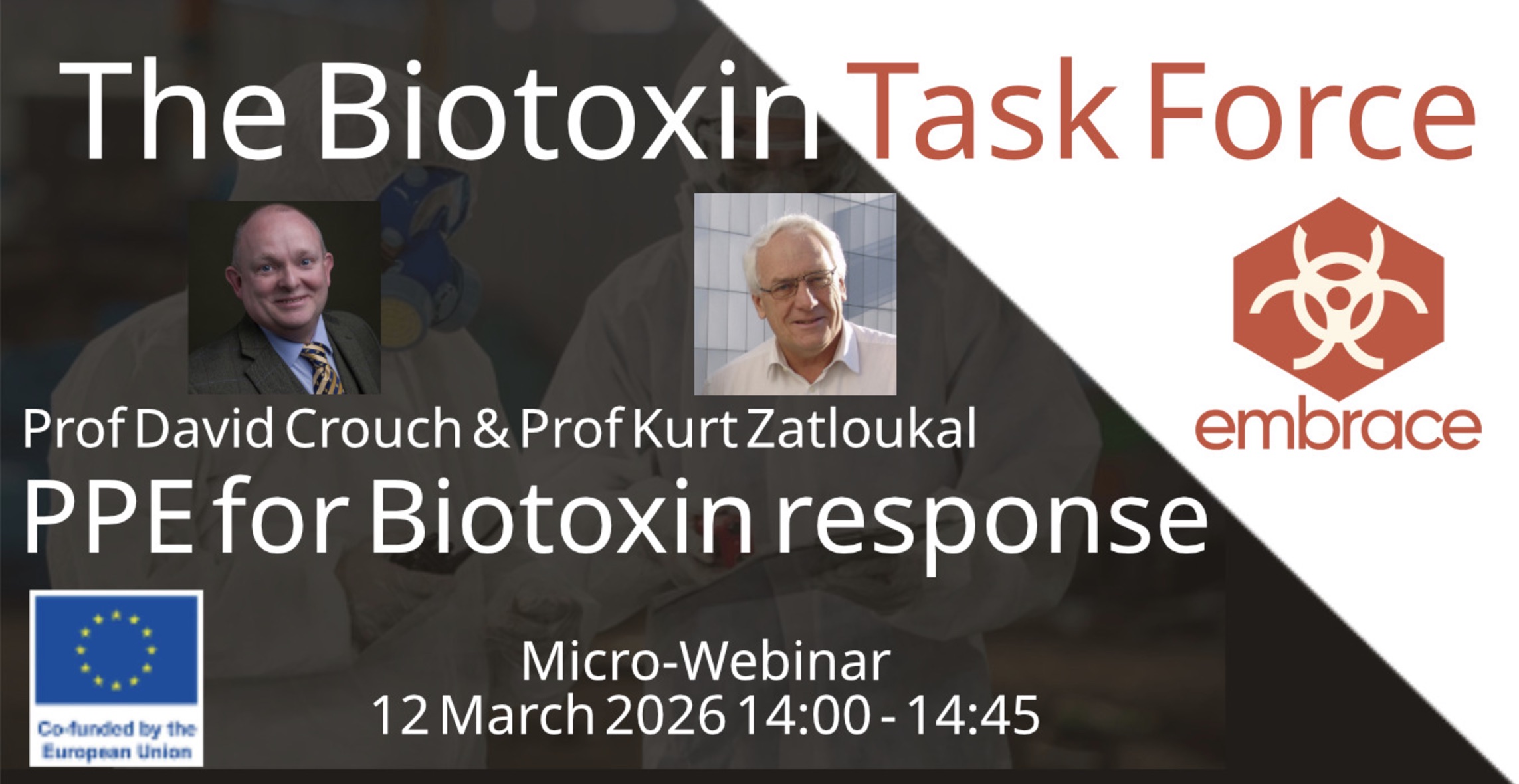
This short duration, high impact micro-webinar is designed to take complex scientific developments and innovations and make them accessible to responders and CBRN practitioners. In an informal discussion, inviting your involvement, the session will discuss:
- Current PPE categories
- Suitability against biotoxins
- Operational limitations, and considerations for responder protection.
Hosted by: Prof David Crouch
Chair of the EMBRACE Biotoxin Task Force
David is a globally recognised expert in Chemical, Biological, Radiological and Nuclear (CBRN) defence and hazardous materials (HazMat) management, with over 30 years’ experience across defence, security, emergency response, and civil nuclear sectors. Head of the CBRN & Survivability Group at Cranfield University, leading the development of advanced HazMat response capabilities, respiratory protection programmes and operational guidance for first responders.
Special Guest: Prof Kurt Zatloukal
Professor of Pathology at the Medical University of Graz
An internationally recognised leader in biobanking, molecular pathology, and precision medicine, Kurt is the founding Director of BBMRI-ERIC, the European Research Infrastructure Consortium for biobanking, and has played a pivotal role in establishing harmonised standards for biospecimen quality, data governance, and ethical frameworks across Europe.
The EMBRACE - BTF Micro-Webinar Series
Delivered as part of the EMBRACE Biotox Hub, this series showcases the practical focus of the Biotoxin Task Force - a dedicated community of experts addressing real-world biological hazard challenges. Designed specifically for first responders and operational practitioners, the series explores critical topics including PPE and respiratory protection, detection and identification of biological agents, standards and interoperability, and emerging tools to support safe, effective response. Each session translates cutting-edge research and specialist insight into operationally relevant guidance, supporting fire and rescue services, emergency medical personnel, and response agencies in strengthening preparedness, safety, and confidence when dealing with biological threats.