From Simulation to Field Action: EMBRACE Tests Its Biotoxin Response Solutions in France

More than 80 volunteers and project partners took part in the first EMBRACE Field Training Exercise (FTX1), held on 12–13 November 2026 in Chartier-Ferrière, France. The exercise simulated a possible biotoxin attack on an aeroplane, putting operational procedures and innovative technologies to the test in a realistic emergency scenario.
How do emergency services respond when faced with a potential biotoxin incident? How can first responders identify dangerous substances, protect themselves and manage the decontamination of potentially exposed individuals? And how can innovative technologies support decision-making when time and reliable information are critical?
These were some of the questions explored during the first EMBRACE Field Training Exercise (FTX1), which took place on 12–13 November 2026 in Chartier-Ferrière, France.
Organised by EMBRACE partner International Emergency Firefighters (PUI), the two-day exercise brought together more than 80 volunteers and project partners for a simulation of a possible biotoxin attack on an aeroplane. Moving from strategic discussions to practical field activities, FTX1 represented an important step in validating the project's concepts, technologies and operational approaches under realistic conditions.
From scenario to operational response
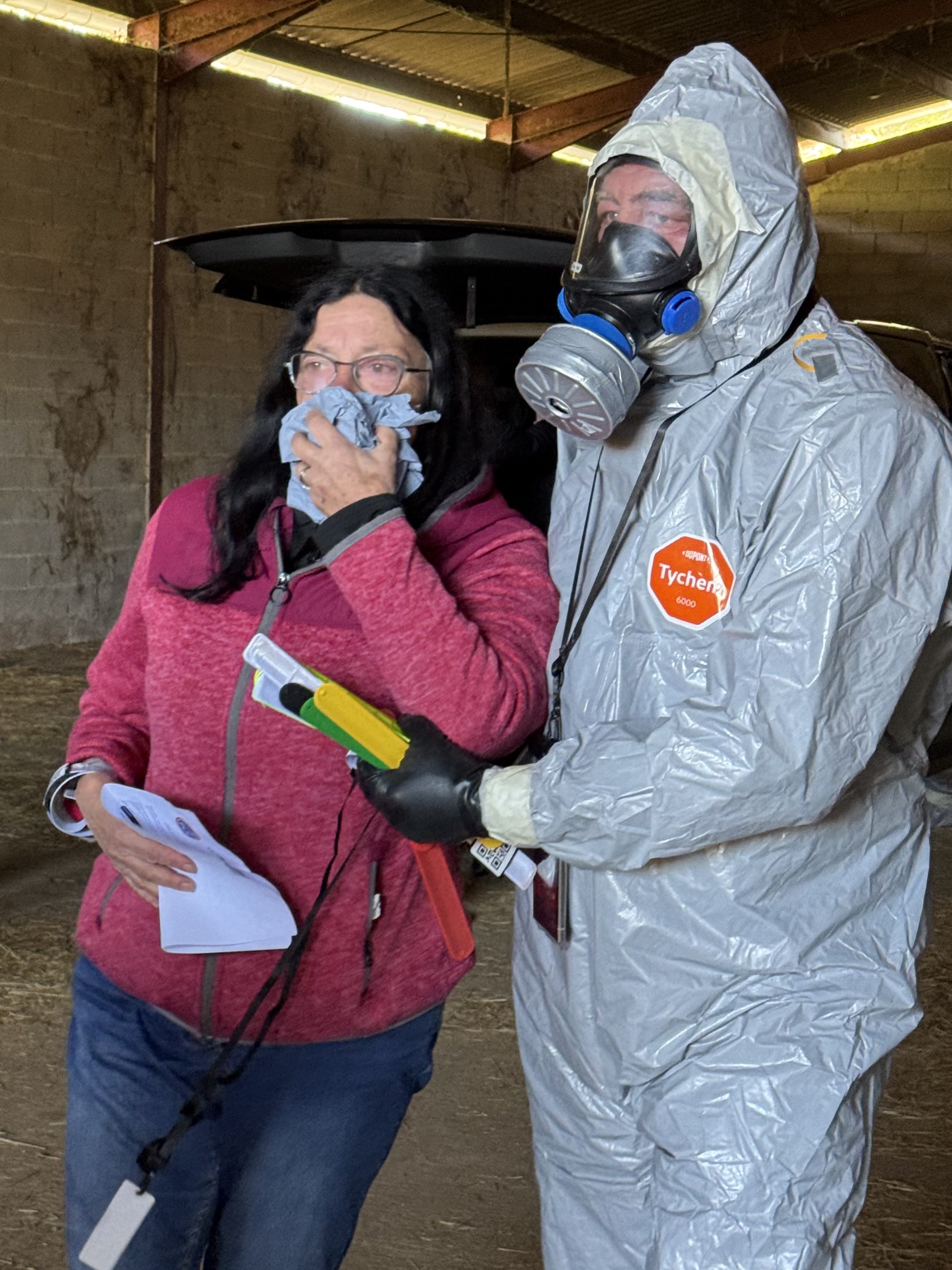 Unlike a tabletop exercise, which focuses primarily on strategic decision-making, governance and coordination, a Field Training Exercise places participants in a simulated operational environment. It allows them to put procedures into practice, interact with equipment and experience the challenges of responding to an evolving emergency.
The scenario developed for FTX1 centred on a possible biotoxin attack on an aeroplane, requiring participants to address multiple aspects of emergency management.
Throughout the exercise, attention was given to three critical stages of the response:
- First-responder protection: Ensuring that emergency personnel can approach and manage a potentially contaminated environment while minimising their own exposure to dangerous substances.
- Detection and identification: Applying specialised equipment and procedures to detect hazardous substances and support the assessment of the incident.
- Decontamination: Managing the decontamination of potentially exposed victims as part of the wider response operation.
Each stage required participants to follow operational procedures while considering the challenges of managing a potential biotoxin incident. The exercise also provided an opportunity to examine how different actors, technologies and response activities can be brought together within a coordinated approach.
EMBRACE Technologies in Action
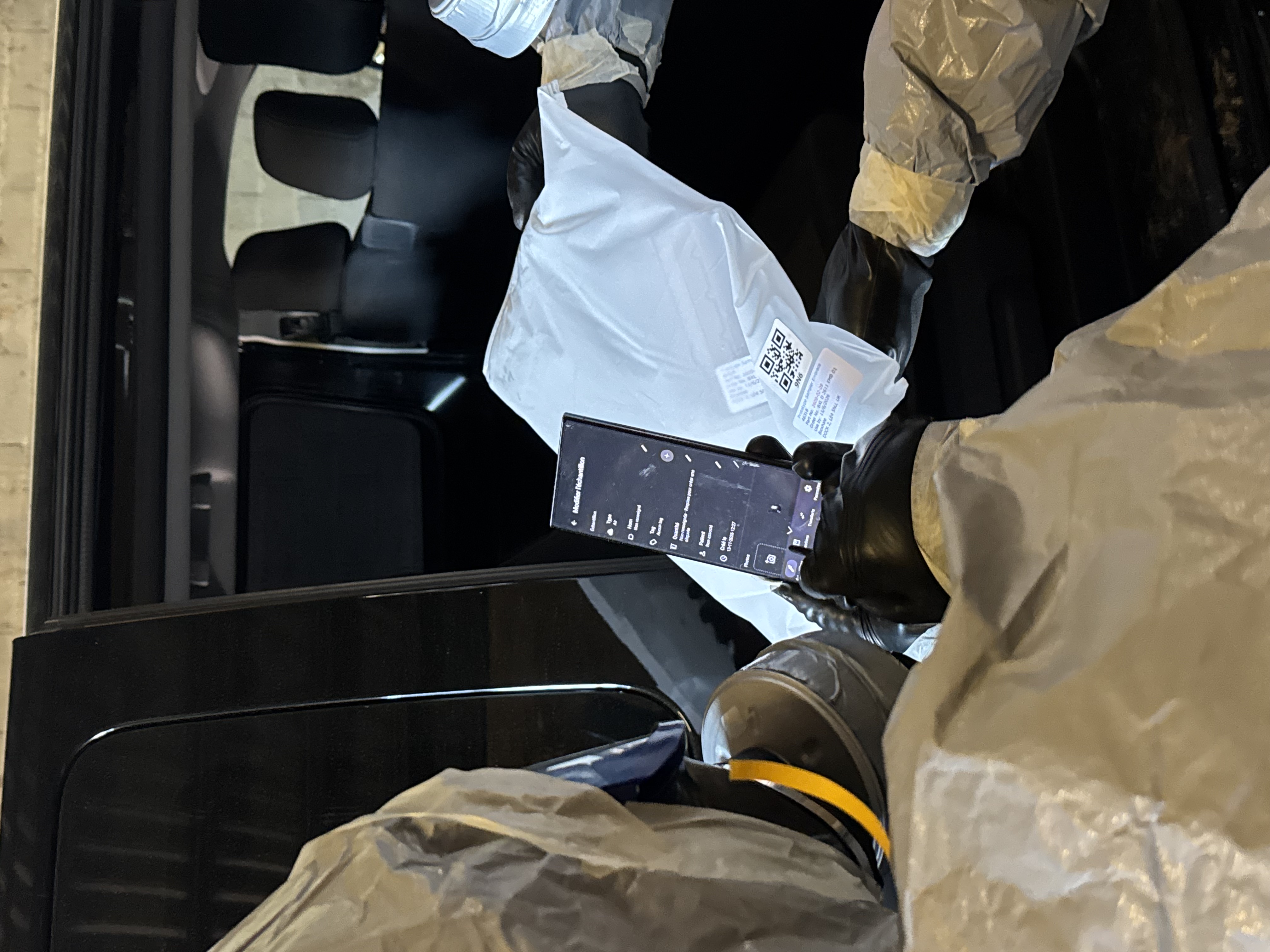 A key objective of FTX1 was to explore how the technologies and tools developed within EMBRACE can support the practical needs of emergency responders.
Biotoxin incidents present specific challenges. Identifying the nature of a threat, assessing its potential impact and determining the appropriate response require access to reliable information, specialised detection capabilities and effective coordination between different stakeholders.
EMBRACE addresses these needs through a portfolio of complementary solutions designed to support different stages of biotoxin incident management.
Knowledge exchange and risk assessment
The Biotoxin Reference and Stakeholder Hub (BRSH) provides a federated and interoperable platform for knowledge exchange between stakeholders. By facilitating access to relevant information and supporting collaboration, the platform contributes to a more connected response ecosystem.
Detection and identification in the field
The ability to detect and identify potentially dangerous substances is another essential component of biotoxin preparedness.
EMBRACE brings together innovative detection and sampling solutions developed by its technology partners. These include the pBDi Portable BioDetector, developed by AIRSENSE Analytics GmbH, which supports on-site detection of biotoxins, bacteria and viruses, and the Differential Mobility Analyzer (DMA) developed by MION Technologies, which assists with biotoxin identification through sampling and analysis.
The project also explores innovative sampling approaches through Bioxhale, including the BreathDraw Sampler, which enables the collection of breath samples for analysis. Its work also encompasses air and white powder sampling. The Casualty and Sample Tracking Systems by Prometech support in registering and following casualties, as well as incident-scene recording and tracking of environmental and casualty-linked samples, creating a usable digital record for the response and later analysis.
These technologies contribute to the broader EMBRACE ambition of strengthening detection capabilities and supporting responders in assessing potential biological threats.
Connecting technology with operational needs
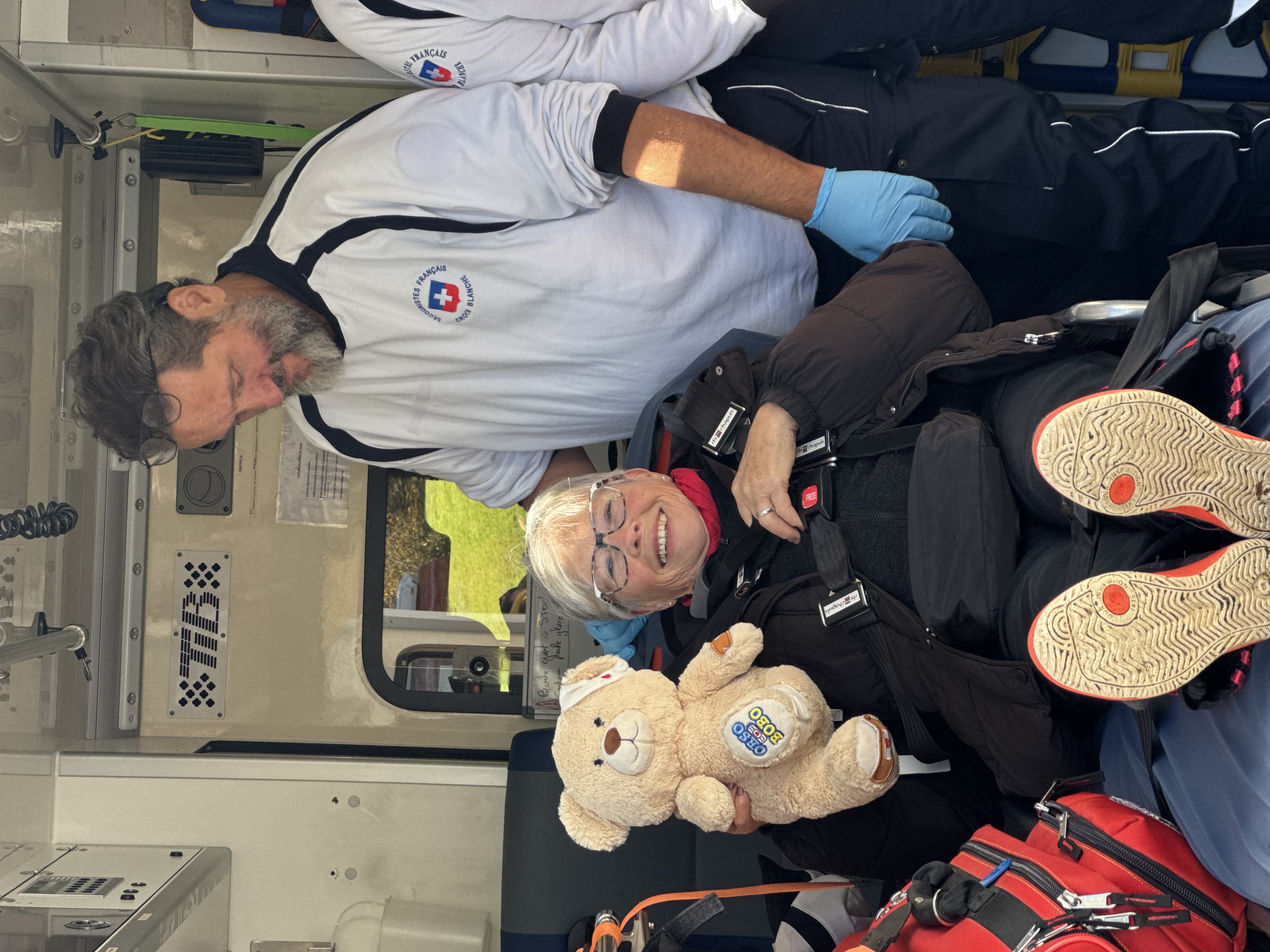 The value of technological innovation ultimately depends on its applicability in real operational environments. A detection device, a risk assessment framework or a knowledge exchange platform must respond to the needs of those who will use it during an emergency.
FTX1 provided an opportunity to bring these different dimensions together, examining how EMBRACE solutions can contribute to the wider response process, from initial assessment and detection to the management of potentially exposed individuals.
The exercise also highlighted the importance of considering technology alongside operational procedures and interagency coordination. No single solution can address all the challenges of a complex biotoxin incident. Effective preparedness depends on the ability to combine technological capabilities, human expertise and established response mechanisms.
EMBRACE in the spotlight: FTX1 featured on France 3 Corrèze
The first EMBRACE Field Training Exercise also received regional media coverage, with the activities in Chartier-Ferrière featured on France 3 Corrèze, the regional channel of France Télévisions.
The report showcases the field activities carried out as part of EMBRACE, highlighting how European partners are joining forces to strengthen preparedness and response capabilities for biotoxin-related incidents.
Bringing together researchers, first responders, civil protection authorities and other relevant stakeholders, FTX1 demonstrated how innovative tools, technologies and operational procedures can be tested and validated in realistic exercise scenarios.
The media coverage offers a glimpse into the practical dimension of the project and its contribution to improving Europe's capacity to anticipate, detect and respond to biotoxin threats.
Watch the France 3 Corrèze report on the EMBRACE Field Training Exercise here.
From field experience to stronger European preparedness
The first EMBRACE Field Training Exercise marked a significant milestone in the project's journey towards improving Europe's preparedness for biotoxin threats.
By bringing together more than 80 volunteers and project partners in a realistic operational scenario, FTX1 offered an opportunity to move beyond theoretical frameworks and explore how innovative solutions can support emergency response in practice.
The experience gained during the exercise will contribute to the continued development and refinement of EMBRACE solutions, helping ensure that they address the practical requirements of the stakeholders who may need to use them.
Ultimately, EMBRACE aims to strengthen the connection between scientific and technological innovation and operational preparedness, contributing to a more coordinated, informed and effective European response to biotoxin incidents.
The work continues. Stay connected with the EMBRACE Biotox Hub for further updates on the project's activities, technologies and results.